Back to Games
Ball Physics

Chain Reaction

Pick 2 to 6 coloured balls and watch every collision spawn a new ball in their mixed colour.

Loading Chain Reaction…

About

Chain Reaction is a colour-mixing chain reaction inside a glowing circular arena. On the setup screen you choose how many starting balls to use, from two to six, and give each one a colour from nine quick swatches or a custom colour picker. Press Start and the balls fly around during a five-second countdown, passing through each other, before collisions switch on.

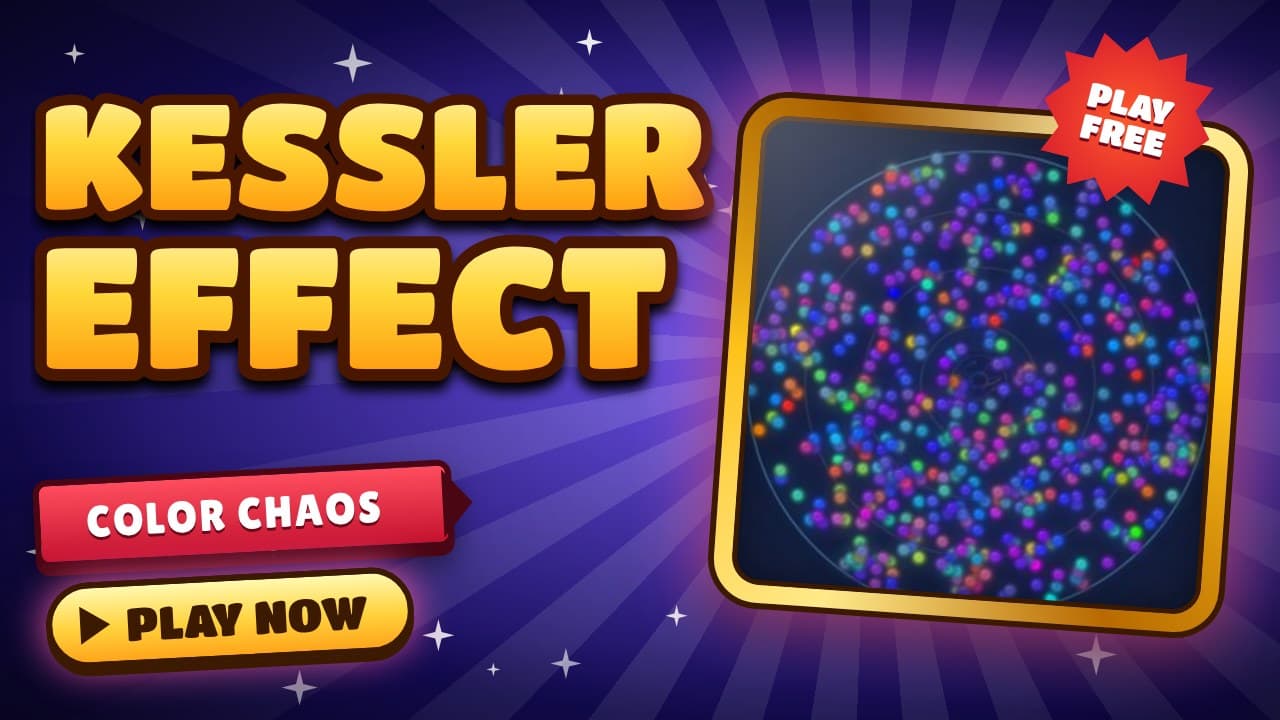
From then on, whenever two balls hit, they bounce apart and a brand new ball appears between them, coloured as a blend of its two parents. Every new ball can collide and spawn more, so the population snowballs until the arena holds a swarm of up to 600 balls. Watching which shades spread is the fun part, and the heading asks which colour will dominate. Collision sounds get louder as the action builds, and there is nothing to control once it starts.

How to Play

  1. Choose the number of starting balls, from 2 to 6.
  2. Tap a swatch or use the custom picker to set each ball's colour.
  3. Press Start and wait out the five-second countdown.
  4. Sit back as collisions spawn new mixed-colour balls; reload the page to set up a new run.

Tips

  • Strongly contrasting starting colours, such as red, green and blue, make it easiest to see blends form and spread.
  • Blends are pushed back toward full saturation, so mixed colours stay vivid instead of fading to grey.
  • Growth is slow for the first few collisions, then the count climbs quickly as every new ball adds more chances to collide.
  • After the 600-ball cap no new balls appear, but the swarm keeps moving so you can study the final colour mix.

Details

Category
Ball Physics
Layout
landscape

A colour-mixing chain reaction

Chain Reaction shows how a few objects can snowball into a crowd. You choose between two and six starting balls and give each one a colour, either from nine quick swatches or with a custom colour picker. After a five-second countdown in which the balls pass through each other, collisions switch on.

From then on, whenever two balls hit, they bounce apart and a new ball appears between them, coloured as a blend of its two parents. Every new ball can collide and create more, so the arena fills until it holds a swarm of up to 600 balls.

Where the name comes from

The name refers to the Kessler syndrome, an idea in space science in which collisions between pieces of debris create more debris, which causes more collisions. The simulation is not a model of real orbits, but it captures the same pattern: growth is slow at first and then speeds up sharply, because each new object adds more chances to collide.

Getting the most out of it

Strongly contrasting starting colours, such as red, green and blue, make it easiest to watch blends form and spread. The blends are pushed back toward full saturation, so mixed colours stay vivid instead of fading to grey. If you start with two similar colours, the arena stays in a narrow range, which is a quieter effect.

Once the 600-ball cap is reached, no new balls appear, but the swarm keeps moving, so you can study the final colour mix. Collision sounds get louder as the action builds, which gives the run a natural rise and finish.

Frequently asked questions

How many balls can there be?
The arena holds up to 600 balls before new ones stop appearing.
Can I control anything once it starts?
No. You set the starting balls and colours, then watch. Reload the page to set up a new run.
Why do new balls have mixed colours?
Each new ball is a blend of the two balls that collided to create it.
Why is it slow at the start?
There are only a few balls, so collisions are rare. Growth speeds up as each new ball adds more chances to collide.

Guides and articles

More to play